Wednesday, August 02, 2006

There used to be a lot of snakes in Singapore

I chanced upon this extremely illogical but hissslarious article by T. S. Daniel (19 May 2004, Singapore Can!), when I was googling on "Singapore Snakes".

There used to be a lot of snakes in Singapore

"There are not very many snakes slithering around the streets of Singapore, But there are a few. And they are very big. Usually about 30 metres long. It wasn’t always like this. Snakes used to be much smaller and there were thousands of them everywhere. What happened is that the stronger snakes started to eat the weaker snakes. This usually meant that the longer snakes were swallowing the shorter snakes. To cut a long story short, the reason there aren’t many snakes left and why those that are left are so big is because they have swallowed all the others. It has been calculated that within 5 years there will be only one snake left in Singapore. And that snake will be so big that when he gets hungry he will mistake the end of his tail for another snake and start eating it. This won’t hurt, of course, because his other end will be so far away. And snake pain doesn’t travel very fast. This, the mad hotness of the sun beating down and the lack of water will probably mean that he will gobble himself up in no time. Then there will be no snakes at all. This is what happened in Ireland."

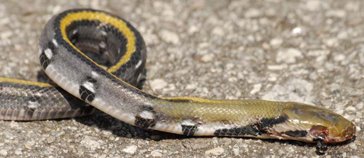
A Snake-Charmed Life in Singapore

Michael Richardson wrote the article "A Snake-Charmed Life in Singapore" in International Herald Tribute on 07 Jan 1997.

The article might be old, but I think it is still good enough to share with you. N. Sivasothi of Habitatnews has kindly uploaded a pdf file of the article on his website.

Richardson was charmed by the snakes in Singapore. I am charmed by him, especially his change of perspective towards snakes.

Some interesting extracts from the article:

" As a boy who spent time on farms in Australia, I was taught that the best snake is a dead one."
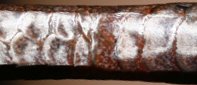
" So when I arrived in Singapore — a small island-state where nearly all of the original tropical. jungle has been replaced by apartment and office blocks, factories, highways and manicured parks and gardens — I did not expect any further problems with snakes."

"I have lately discovered that one of the reasons Singaporeans are disinclined to rent such places (old British military quarters) — apart from their reputation as being haunted — is the prevalence of snakes."

" But it is hard to feel so affectionate about the snakes that seek sanctuary in the park where we live."

" I never try to harm these snakes as none of them is aggressive or seriously venomous."

"The snake was fully exposed on a bare embankment — a relatively easy target for my stick. But instead of striking, I hesitated, mesmerized by its slow, sinuous movement."
.
"It was true that I was still recovering from food poisoning. But that was only part of the truth."

Tuesday, August 01, 2006

Snake Roadkills in Singapore

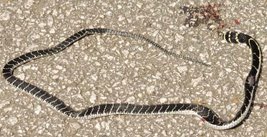
Norman Lim sighted FOUR roadkills of different snake species on a single day (27 June 2006) on an offshore island of Singapore: Coelognathus flavolineatus (Common Malayan Racer), Dendrelaphis pictus (Painted Bronzeback), Naja sumatrana (Equatorial Spitting Cobra), and a Ophiophagus hannah (King Cobra) juvenile.

Snakes need to bask but these poor souls were probably enjoying a nice sun tan, when they were driven to their graves. Nobody knows how many snakes are killed this way in Singapore. Please drive safely, for the snakes.

Bad for snakes but good for scientists. Live snakes are hard to collect, thus dead specimens are extremely precious. Scientists can still collect loads of useful data from well-preserved specimens, without killing one. You can do your part for local conservation by reporting roadkills to the Raffles Museum of Biodiversity Research soon after your sighting.

Sunday, July 02, 2006

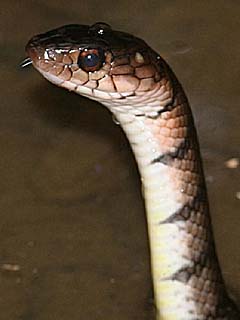
Malayan Brown Snake Xenelaphis hexagonotus


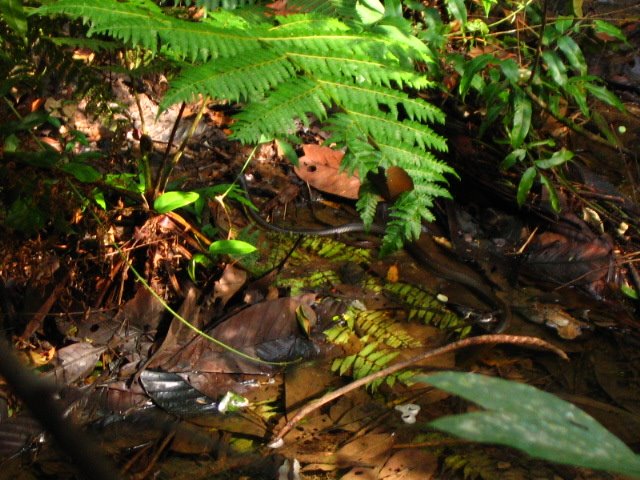
An unexpected sighting of this long snake while on a fieldtrip to CCNR one day...well ok spotted on 22nd June 06 10.15 plus minus 15min in the morning if you have to know. Noone will blame you if you can't really see the brown snake in the midst of the brown background, it's the best shot ive got! In any case, this guy was busy swimming up & down the forest stream, foraging or perhaps it got agitated by some humanoid screams. I hope it didn't become deaf! After some verification with Mr Snake Hunter* himself, this creature is most probably a Malayan Brown Snake, Xenelaphis hexagonotus. For those fact hungry people, do read on...

Upclose: Beautifully captured by Norman Lim and K W Chan
(see Wildlife Singapore)


Reaching around 2 metres in length, the Malayan Brown Snake is a harmless, largely terrestrial species inhabiting forests, plantations and swamps (freshwater and mangrove).
It feeds on other vertebrates, particularly rodents, but in freshwater swamp habitats it is known to be highly aquatic in behaviour, feeding chiefly on small fishes and frogs. The typical hunting method is to adopt an erect posture, waiting for prey to come into range, and then to strike quickly.

Dorsal scales are brown, becoming more olive-green posteriorly, especially in juveniles. A regular series of dark brown bands extends slightly onto the belly, which is white or pale yellow.
The species ranges from Southern Burma and Southern Thailand, and parts of Indochina, through Peninsular Malaysia and Singapore to the Riau Archipelago, Sumatra, Borneo and Java.

Info adapted from Nick Baker's EcologyAsia, click on this to check out his snapshots.

Another lucky candidate mphil spotted a Malayan Brown on P. Ubin, his posting on ClubSnap). According to him & Nparks,
this species has yet to make it to the NParks list of snakes found on P.Ubin. Well now we know these guys are around in our backyard, aint that comforting =o>

*Chim C K

Friday, June 16, 2006

House Wolf Snake (Lycodon capucinus)

Dionne Teo found a dead House Wolf Snake (Lycodon capucinus) along the roadside of Florissa Park on 12 June 2006 at 8.15 am. The snake was in an awkward position, biting on its own mid-body. No injuries were detected. I wonder what is the cause of the mysterious death!

This nocturnal species (Lim & Lee, 1989; Lim & Lim, 1992; Cox et al., 1998) is commonly found in buildings (Lim & Lee, 1989), and also inhabits dry forested areas and cultivated areas (Cox et al., 1998). It possesses remarkable climbing abilities, and often lives in cracks and crevices of walls or timber (Lim & Lee, 1989). It’s favourite prey is geckos (Lim & Lee, 1989; Lim & Lim, 1992), but it also feeds on other lizards and frogs (Cox et al., 1998). The prey is seized by the head and held in the snake’s coils till it is finally subdued (Lim & Lee, 1989). This non-venomous snake (Lim & Lee, 1989; Lim & Lim, 1992) is generally quite inoffensive (Lim & Lim, 1992).

House Wolf Snake lays clutches of 3-11 eggs (Lim & Lee, 1989; Cox et al., 1998), and the young hatch from the eggs after an incubation period of 11/2 months (Lim & Lee, 1989). It can reach a length of 76 cm (Cox et al., 1998).


This species occurs throughout Southeast Asia (Cox et al., 1998).


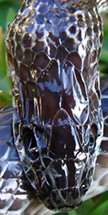
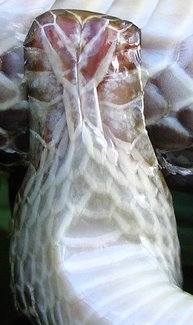
From left to right: Dorsal side of head; Ventral side of head; Inside of jaws; Right side of head; Dorsal side of body; Side of body; Anal Plate; Ventral side of tail.

Sivasothi reported on 1 July 2005, that a House Wolf Snake resided on Hopea sangal wood slices he had left out to dry.

Kctsang caught a House Wolf Snake in a ladies toilet on 26 May 2003, and has some good photographs of the animal here.

“Exploration Trails Gallery” has the photograph of a House Wolf Snake sighted in Pulau Hantu.

* All photographs from Ms Dionne Teo

REFERENCES

Cox, M. J., van Dijk, P. P., Nabhitabhata, J. & Thirakhupt, K., 1998. A photographic guide to snakes and other reptiles of Peninsula Malaysia, Singapore and Thailand. New Holland Publishers (UK) Ltd, p. 12.

Lim, F. L. K. & Lee, M. T. M., 1989. Fascinating Snakes of Southeast Asia – an Introduction. Tropical Press, Kuala Lumpur, p. 30.

Lim, K. K. P. & Lim, F. L. K., 1992. A Guide To The Amphibians & Reptiles Of Singapore. Singapore Science Centre, p. 147.

Thursday, June 15, 2006

Hisssteria On The Far Side

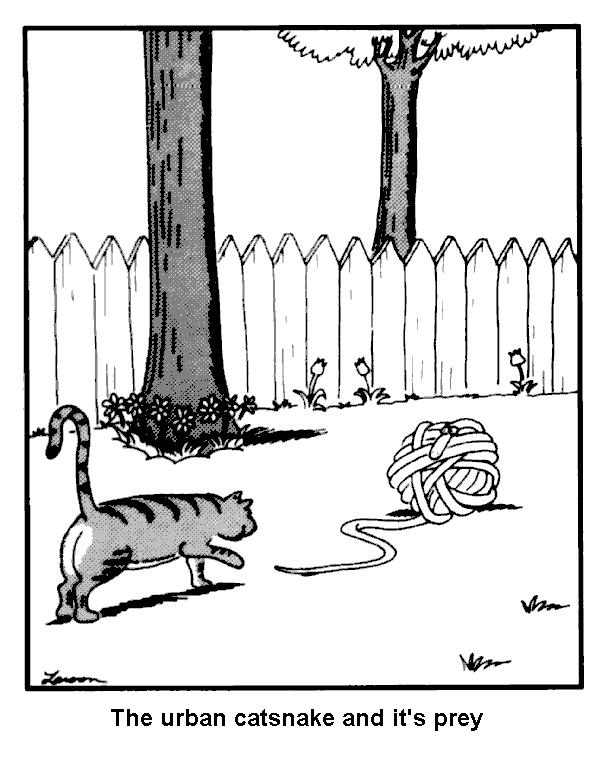
Gary Larson loves to make fun of snakes in his "The Far Side" comics strips. Really hisssterical! Plenty of such strips can be found here. Have a good hisss!


Tuesday, June 06, 2006

Checklist of Snakes in Pulau Ubin

I Yahoo-ed, discovered and downloaded the "Checklist of amphibians, reptiles and mammals of Pulau Ubin", published by the National Parks Board (NParks). It is unfortunate that the author and date of publication was not stated. The list included 20 species of snakes:

Reticulated Python (Python reticulatus) CR
Sunbeam Snake (Xenopeltis unicolor) CR
Common Blind snake (Ramphotyphlops braminus) CR

White-bellied Blind Snake (Typhlops muelleri) SR

Oriental Whip Snake (Ahaetulla prasina) CR

Dog-toothed Cat Snake (Boiga cynodon) SR
Yellow-ringed Cat Snake (Boiga dendrophila) SR
Paradise Tree Snake (Chrysopelea paradisi) CR

Twin-barred Tree Snake (Chrysopelea pelias) SR
Striped Bronzeback (Dendrelaphis caudolineatus) CR

Painted Bronzeback (Dendrelaphis pictus) CR

Keel-bellied Whip Snake (Dryophiops rubescens) SR
Common Malayan Racer (Coelognathus flavolineatus / Elaphe flavolineata) UR
Striped Kukri Snake (Oligodon octolineatus) CR
House Wolf Snake (Lycodon capucinus / Ophites aulicus) CR
Dog-faced Water Snake (Cerberus rynchops) CR
Banded Krait (Bungarus fasciatus) SR

Equatorial Spitting Cobra (Naja sumatrana) CR
Marbled Sea Snake (Aipysurus eydouxii) SR/V
Shore Pit-viper (Trimeresurus purpureomaculatus)
SR

C=Common, U=Ucommon, S=Scarce
R=Resident, F=Feral, V=Visitor

Yellow-lipped Sea Krait (Laticauda colubrina)

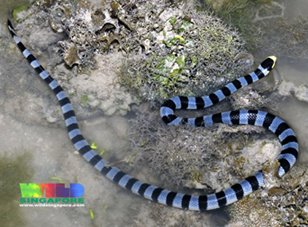
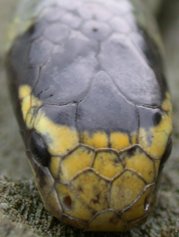
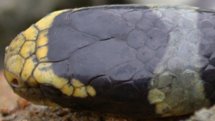
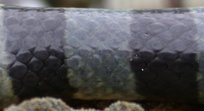
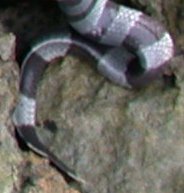
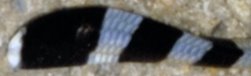
Yellow-lipped Sea Kraits (Laticauda colubrina) are large (to 1.5 m, 2 kg) amphibious sea snakes that forage for eels in tropical oceans but return to land to digest their prey, slough their skins, mate, and lay eggs (Lim & Lee, 1989; Lim & Lim, 1992; Cox et al., 1998; Shetty & Shine, 2002a). This species is usually found on coral atolls and rocky islets where it congregates in large numbers during the breeding season (Lim & Lee, 1989; Lim & Lim, 1992; Cox et al., 1998). The loss of such habitats in Singapore is threatening this beautiful snakes (Ng, 1995). The eggs are laid in clutches of 5-9 (Cox et al., 1998), and deposited in crevices and holes in the rocks (Lim & Lee, 1989). The hatching of the eggs was reported to occur in the period of June to August on islands near Singapore (Lim & Lee, 1989; Cox et al., 1998). This snake is widely distributed, ranging from the Bay of Bengal to the southwestern part of the Pacific Ocean (Lim & Lee, 1989; Cox et al., 1998).


From left to right: Dorsal side of head; Left side of head; Right side of head; Dorsal side of body; Right side of body; Ventral side of body; Dorsal side of tail, Right side of tail.

My first encounter with a Yellow-lipped Sea Krait (Laticauda colubrina) was on 24 June 2005 at about 10 am. The snake was on the water’s surface near the jetty of St. John’s Island. It was behaving strangely, somewhat twisting and turning. I recorded three video clips:


I noticed that there is a bulge at the region of the snake's stomach (indicating that it just had a meal?). It soon “floated” very near to the seawall. I wanted to check if the snake was suffering from any injuries or diseases, so I picked it up and rested it on the sea wall. The snake looked “normal”. It disappeared into the deep waters after being released.

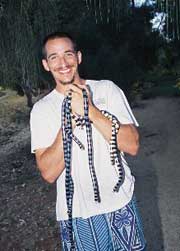
These highly venomous snakes are generally non-aggresive but they might bite when roughly handled (Chou, 1993). Reptile ecologist Robert Reed, pictured on the left, even commented that "The Yellow-lipped Sea Krait is so tame and docile that the venomous animals can be collected by the handful".


Ria Tan (Wild Singapore) and Debby Ng (Hantu Bloggers) have also sighted Yellow-lipped Sea Kraits in the Southern Islands. These are their accounts:

Ria Tan; Sisters’ Island during low tide; 24 December 2003
Debby Ng; Pulau Hantu during diving; 22 May 2004
Ria Tan; Pulau Semakau during low tide; 18 September 2005
Ria Tan; Sisters’ Island during low tide; 12 February 2006
Ria Tan; Pulau Hantu during low tide; 15 April 2006

*All photographs, except the one on Robert Reed, from Mr Chim Chee Kong and Ms Ria Tan.

The ecology and behaviour of Yellow-lipped Sea Kraits are relatively little known until recently when researches conducted by Sohan Shetty and Richard Shine on the Fijian islands produced a wealth of knowledge on these beautiful creatures. Below is a summary of their findings:

Yellow-lipped sea kraits spent equal amounts of time on land versus in the ocean, moving between these two habitats about once every 10 days (Shetty & Shine, 2002a). These snakes maintained relatively high and constant body temperatures both while on land and in the water; the only overt thermoregulation involved shade-seeking (Shetty & Shine, 2002a). Juvenile sea kraits rarely ventured far from water, whereas adults often moved well inland (Shetty & Shine, 2002a). The snakes move about at night, engaged in courtship during the morning and were inactive during the afternoon (Shetty & Shine, 2002a). Thus, snakes were frequently found in courting groups during the morning, but most were solitary at night (Shetty & Shine, 2002a). Male sea kraits move about more frequently and actively on land than do females (Shetty & Shine, 2002a).

The mating season is from September to December (Shetty & Shine, 2002d). On land, many females are accompanied by one or more courting males (Shetty & Shine, 2002d). The males align their bodies with that of the female and occasionally twitch spasmodically (Shetty & Shine, 2002d). These groups remain together for days, with overt courtship by males much less frequent and intense than in most previously-studied snake species (Shetty & Shine, 2002d). Larger females attracted more intense courtship than did smaller animals (Shetty & Shine, 2002d).

Females grow much larger than males, and have longer and wider heads than do conspecific males of the same body length (Shetty & Shine, 2002c). Adult female sea kraits feed primarily on larger conger eels, and take only a single prey item per foraging bout (Shetty & Shine, 2002c). In contrast, adult males feed upon smaller moray eels, and frequently take multiple prey items (Shetty & Shine, 2002c). Prey size increases with snake body size in both males and females (Shetty & Shine, 2002c). Female sea kraits consume larger eels relative to predator head size and body length than do males (Shetty & Shine, 2002c).

Males have much longer tails (relative to snout-vent length) than do females (Shine & Shetty, 2001b). This sex difference may reflect the fact that females use their tails primarily for swimming, whereas males also must frequently use the tail in terrestrial locomotion and in courtship as well as for swimming (Shine & Shetty, 2001b).

The evolutionary modifications of these snakes for marine life have enhanced their swimming speeds by about 60%, but decreased their terrestrial locomotor speed by about 80% (Shine & Shetty, 2001a). Larger snakes moved faster than smaller individuals in absolute terms but were slower in terms of body lengths travelled per second, especially on land (Shine & Shetty, 2001a). Male sea kraits were faster than females (independent of the body-size effect), especially on land (Shine & Shetty, 2001a). Prey items in the gut reduced locomotor speeds both on land and in water (Shine & Shetty, 2001a).

Shetty and Shine (2003) also found that relocated snakes returned “home” almost immediately after they were released.

REFERENCES

Chou, L. M., 1993. A Guide To The Dangerous Marine Animals Of Singapore. Singapore Science Centre, p. 160.

Cox, M. J., van Dijk, P. P., Nabhitabhata, J. & Thirakhupt, K., 1998. A photographic guide to snakes and other reptiles of Peninsula Malaysia, Singapore and Thailand. New Holland Publishers (UK) Ltd, p. 12.

Lim, F. L. K. & Lee, M. T. M., 1989. Fascinating Snakes of Southeast Asia – an Introduction. Tropical Press, Kuala Lumpur, p. 30.

Lim, K. K. P. & Lim, F. L. K., 1992. A Guide To The Amphibians & Reptiles Of Singapore. Singapore Science Centre, p. 147.

Ng, P. K. L., 1995. A Guide To The Threatened Animals Of Singapore. Singapore Science Centre, p. 160.

Shetty, S. & Shine, R., 2002. Activity patterns of yellow-lipped sea kraits (Laticauda colubrina) on a Fijian island. Copeia 2002: 77-85.

Shetty, S. & Shine, R., 2002. Philopatry and homing behavior of sea snakes (Laticauda colubrina) from two adjacent islands in Fiji. Conservation Biology 16: 1422-1426.

Shetty, S. & Shine, R., 2002. Sexual divergence in diets and morphology in Fijian sea snakes, Laticauda colubrina (Laticaudidae). Austral Ecology 27: 77-84.

Shetty, S. & Shine, R., 2002. The mating system of yellow-lipped sea kraits (Laticauda colubrina, Laticaudinae). Herpetologica 58: 170-180.

Shine, R., & Shetty, S., 2001. Moving in two worlds: aquatic and terrestrial locomotion in sea snakes (Laticauda colubrina, Laticaudidae). Journal of Evolutionary Biology 14: 338-346.

Shine, R., & Shetty, S., 2001. The influence of natural selection and sexual selection on the tails of sea-snakes (Laticauda colubrina). Biological Journal of the Linnean Society 74: 121-129.

Thursday, June 01, 2006

Keel-bellied Whip Snake (Dryophiops rubescens)

An unlucky Keel-bellied Whip Snake (Dryophiops rubescens) fell from a tree, landed on the windscreen of a vehicle, and was captured on 20 May 2006 in the day on an offshore island. Ironically, it is supposed to have acute eyesight that enables it to seek out elusive prey among its leafy habitat (Lim & Lee, 1989). Prefered prey includes frogs and geckos (Cox et al., 1998). It is mildly venomous (Lim & Lee, 1989; Lim & Lim, 1992). This diurnal and exclusively arboreal snake prefers forests up to 500 m (Lim & Lim, 1992; Cox et al., 1998).

A clutch of 2 eggs is known (Cox et al., 1998). This species can grow to a little over 1 m in length (Lim & Lee, 1989; Lim & Lim, 1992; Cox et al., 1998).

Keel-bellied Whip Snake is considered vulnerable in Singapore (Ng & Wee, 1994). It inhabits southern Thailand, Malaysia, Singapore, much of Indonesia and the southern Philippines (Cox et al., 1998).


From left to right: Dorsal side of head; Ventral side of head; Right side of head; Dorsal side of body; Ventral side of head; Ventral side of tail and anal plate.

* All photographs from Mr Chan Kwok Wai and Mr Norman Lim.

REFERENCES

Cox, M. J., van Dijk, P. P., Nabhitabhata, J. & Thirakhupt, K., 1998. A photographic guide to snakes and other reptiles of Peninsula Malaysia, Singapore and Thailand. New Holland Publishers (UK) Ltd, p. 12.

Lim, F. L. K. & Lee, M. T. M., 1989. Fascinating Snakes of Southeast Asia – an Introduction. Tropical Press, Kuala Lumpur, p. 30.

Lim, K. K. P. & Lim, F. L. K., 1992. A Guide To The Amphibians & Reptiles Of Singapore. Singapore Science Centre, p. 147.

Ng., P. K. L. & Wee, Y. C., 1994. The Singapore Red Data Book – Threatened Plants & Animals Of Singapore. The Nature Society (Singapore), p. 331.

Puff-faced Water Snakes (Homalopsis buccata)

I (together with Ria Tan, Chan Kwok Wai, and Charlene Yeong) visited a freshwater pond in Sungei Buloh Wetland Reserve on 19 May 2006, at about 8 pm, and found that the Puff-faced Water Snakes (Homalopsis buccata) are particularly abundant. They are probably the only other snakes in Singapore, besides the Dog-faced Water Snakes (Cerberus rynchops), to appear in high densities. These nocturnal snakes are more or less confined to freshwater habitats, such as rivers, ponds, and canals (Lim & Lee, 1989; Lim & Lim, 1992; Cox et al., 1998).

We sighted both juveniles and adults, which have slightly different scale colourations and patterns. Females give birth to 2-20 young of about 230 mm in a litter (Lim & Lee, 1989; Cox et al., 1998). This species can grow to a little over 1 m in length (Lim & Lee, 1989; Lim & Lim, 1992; Cox et al., 1998).

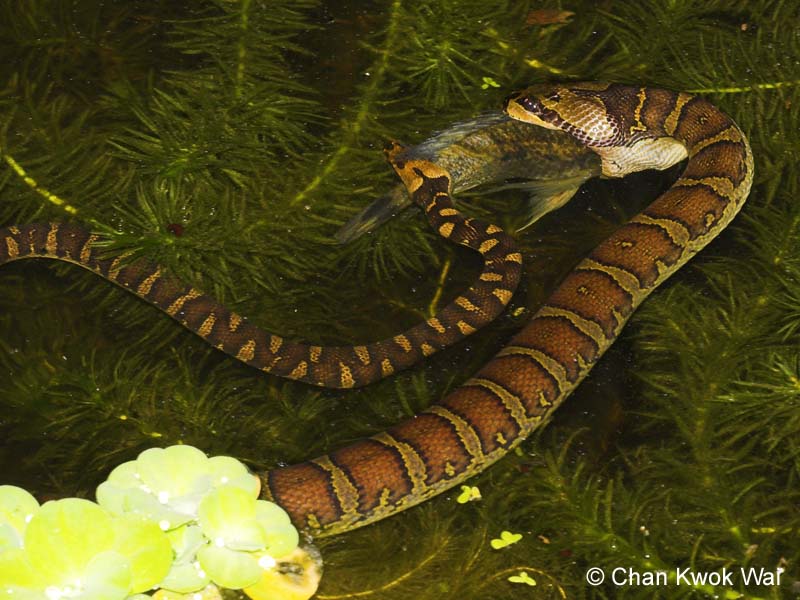
We also witnessed an adult and a juvenile fighting over a prey (Tilapia?)! The tinier one, as expected, lost the tug-of-war. Puff-faced Water Snakes are also known to consume frogs (Cox et al., 1998). Due to their appetite for freshwater fish, these snakes are considered pests in ornamental fish farms (Lim & Lee, 1989; Lim & Lim, 1992).

There are mixed accounts on the temperament of this mildly-venomous species. Lim & Lee (1989) claimed that it has a vicious temper and will bite severely if roughly handled. But according to Lim & Lim (1992), this is one gentle snake!


Puff-faced Water Snake inhabits most of Southeast Asia, including southern Thailand, Malaysia, and Singapore (Cox et al., 1998).


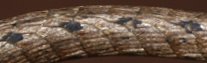
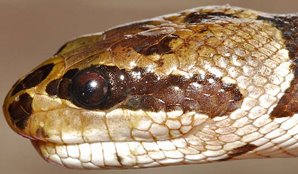
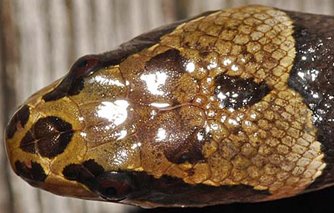
From left to right: Front of head; Left side of head; Dorsal side of head; Ventral side of head; Dorsal side of body; Ventral side of body; Ventral side of tail and anal plate.

* All photographs from Mr Chan Kwok Wai.

REFERENCES

Cox, M. J., van Dijk, P. P., Nabhitabhata, J. & Thirakhupt, K., 1998. A photographic guide to snakes and other reptiles of Peninsula Malaysia, Singapore and Thailand. New Holland Publishers (UK) Ltd, p. 12.

Lim, F. L. K. & Lee, M. T. M., 1989. Fascinating Snakes of Southeast Asia – an Introduction. Tropical Press, Kuala Lumpur, p. 30.

Lim, K. K. P. & Lim, F. L. K., 1992. A Guide To The Amphibians & Reptiles Of Singapore. Singapore Science Centre, p. 147.